
Sigur Ros – Adelaide Entertainment Centre
Sigur Ros – Adelaide Entertainment Centre
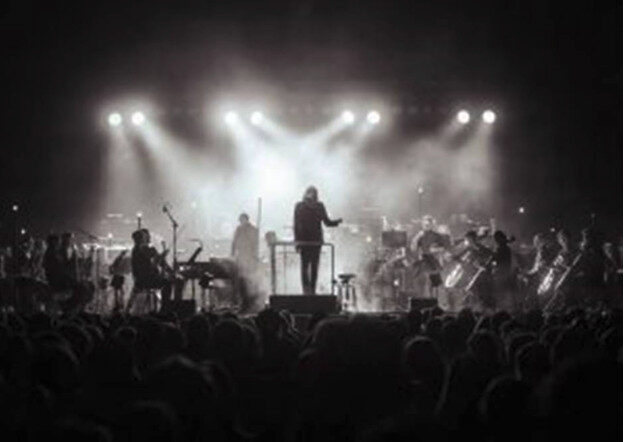
Sigur Rós and the Adelaide Symphony Orchestra captivated the Adelaide Entertainment Centre on the second night of their orchestral tour. I entered the venue with only a passing knowledge of the group, but left feeling truly wound up in the transcendental web that only Sigur Rós can weave.
Categorising Sigur Rós as ‘neo-classical’ feels like the closest approximation of a genre label I can offer. The band comprises lead vocalist and guitarist Jónsi, bassist Georg Hólm, and keyboardist Kjartan Sveinsson. This tour marks their first time playing with a full orchestra in Australia — a 41-piece orchestra, to be precise. As the band took to the stage, no introduction was needed; its members were nestled amongst the orchestra in the pit, and a single moment of applause was enough to prelude the experience.
In a world of distortion, the pure voice and tones of the band feel refreshing. I was struck by how Jónsi’s voice mirrored the timbre and quality of the violin. When singer and strings met on a note, the two blended into a unified, indistinguishable sound. This is reported to have been part of the band’s goal — to be incorporated into the ensemble rather than merely fronting it.
Jónsi’s bowed guitar seemed to glide above the orchestra, the strings guiding us tenderly from one flourish to the next. The drums gave the piece rhythm and grounded the symphony in its journeys. The lighting was subdued, yet it seemed to breathe in time with the music. My ear is untrained to the nuances of an orchestra: as soon as I became attuned to a pattern in a song, a new idea had already developed alongside it.

Ahead of the show – the band’s bassist Georg Hólm was interviewed on Three D Radio. ‘Arts Garden’ host James Murphy covered a lot of ground with Georg, speaking about the power of music as a language, making the small feel big, and the band’s collaboration with orchestras.
In the interview, Georg mused that “music communicates without saying anything… it doesn’t need the vowels and consonants to do it.” He recalled one saying in particular from Ken Thomas, the band’s first producer: “just remember that making music is only moving air.” The vibrations of a speaker move air to make sound; the movement of air creates emotion.
There is a vast ocean between the intent of the artist and the interpretation of the listener. This is all the more obscure with a band like Sigur Rós, where not a single word of English is spoken during the performance. To my ears this lack of grounding is refreshing, allowing every song to become an instrumental.
Having not been privy to much of the band’s catalogue, identifying individual songs proved difficult. I began to distinguish the compositions by the feelings they conveyed. Some invoked great sadness — a sense of futility for all the efforts of mankind. Another, with languished harmonies, made me feel as if I were sitting in a church choir. Others were more hopeful, prompting memories of spring, fresh bread, and warmth.
As Georg put it, “I’ve always liked this idea since I was a kid… of things being very small and very big at the same time,” which he explained as “whispering these big things.” It was a concept that only made sense after seeing the band live. They have a certain power to focus the audience’s attention and give weight to seemingly minute elements of the composition.
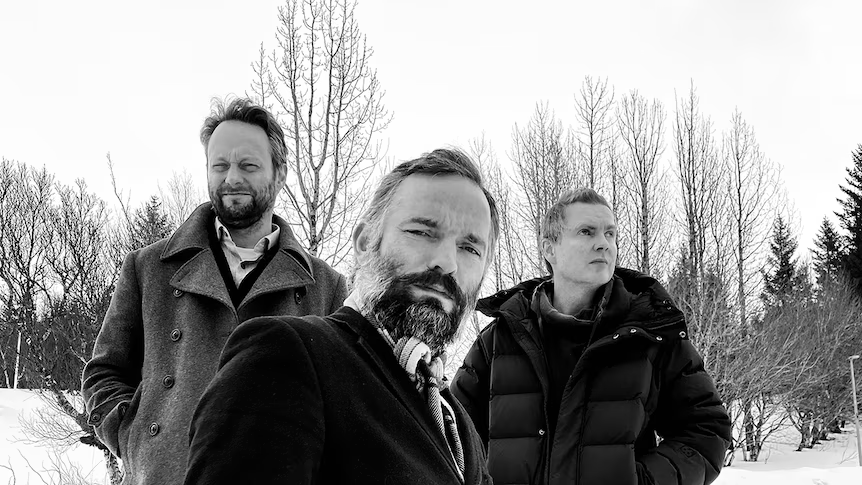
On Conducting – in Australia Sigur Ros is playing with five different orchestras. Georg cites conductor Rob Ames as the driving force behind the band’s orchestral collaborations: he has “been the key to making this happen… he just speaks music.” The members are particularly attuned to how their music sits with the orchestral arrangements. They did not “want to have this moat between the Sigur Rós band and the orchestra… it was meant to be us and the orchestra.” That preparation came across on the night; it felt as if every instrument was given room to breathe.
A few weeks earlier I had attended the Adelaide Symphony Orchestra’s performance with Josh Pyke. While that collaboration felt grand and enhanced the experience, I felt the orchestra overpowered the songs I had grown up listening to. For Sigur Rós, by contrast, the orchestra served to elevate and complement every composition. As Georg summarised, “those two words are supposed to speak to each other… it would be the Sigur Rós orchestra.” The professionalism on the night was palpable; the members of the ASO seemed to appreciate the people they were working with, and triumphed on the occasion.
The final song felt like the breaking of the emotional spell that had been cast over the night. Thumping drums drove a dainty rhythm on the piano, given urgency by the strings, then subdued by a xylophone and the bowed guitar. The ensemble erupted again with the lead vocals and the whole orchestra, lights washing over the crowd as they rose for an ovation. It was hard not to smile. The orchestra played on as the core members walked off stage, the sound swelling into a wall of noise akin to the end of the Beatles’ ‘A Day in the Life’ — gradually abating, disappearing into an Icelandic abyss.
Much of the hype around Sigur Rós is that listening to their music is a deeply emotional experience; concert-goers often report crying and something akin to a deep spiritual experience. It’s music that connects with the soul — it has the power to quiet crying children and silence car alarms. I don’t think I was truly prepared for it. I needed the rest that this music invokes. It made me feel a nostalgia for a place I have never been. This is one gig that will be committed to memory.
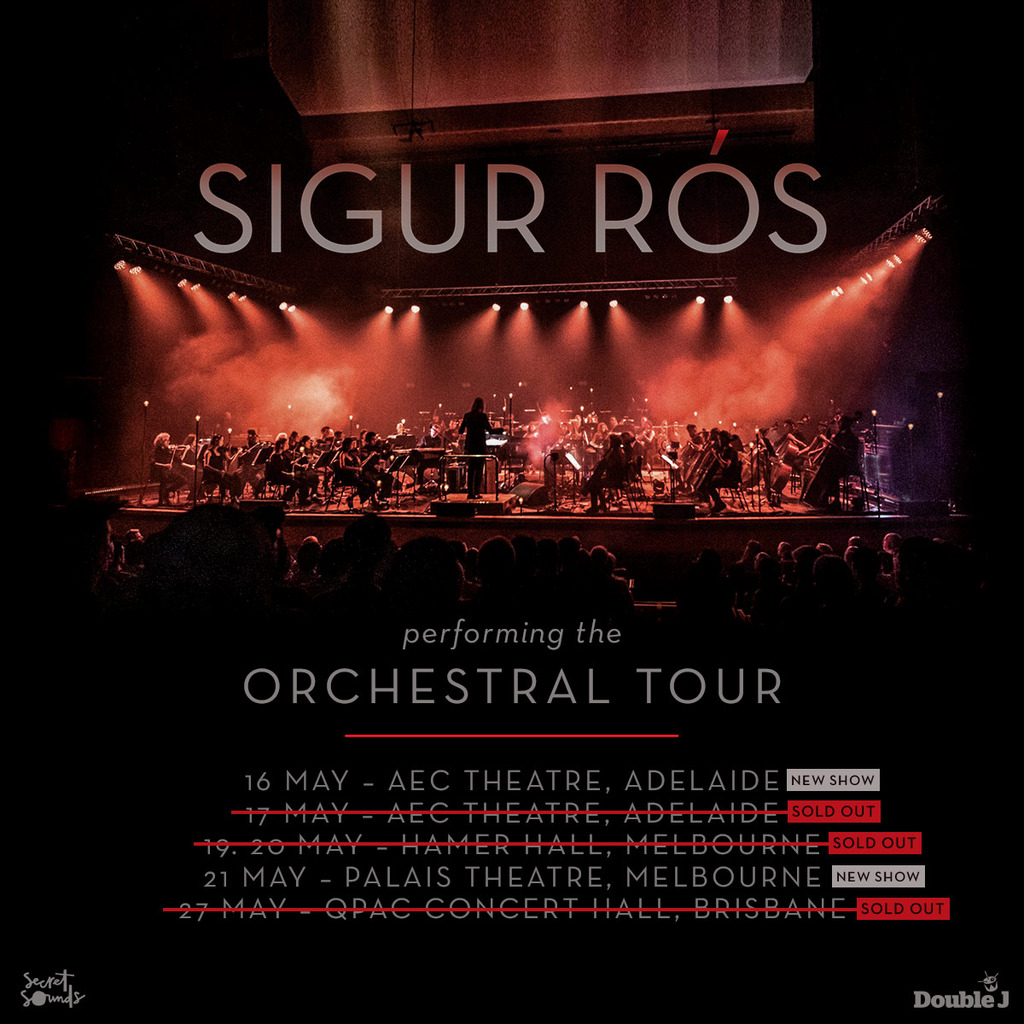
Only the Brisbane shows remain (May 27th and 28th), and the band are in fine form for their tour of Europe later this year.
Written by Joshua Hibovesky. Images supplied by Ashleigh Noordhoek (@ashndhk). Published 26/5/25.